

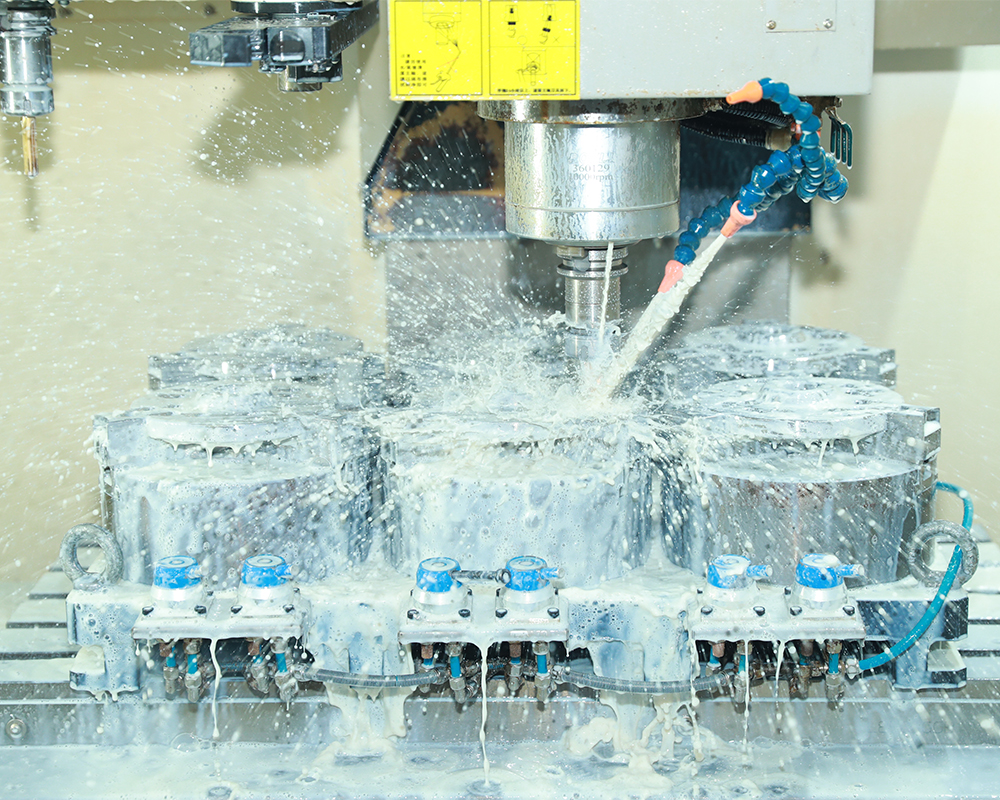
Choosing the appropriate cutting fluid in CNC lathe machining requires comprehensive consideration of factors such as machining materials, process requirements, machine tool characteristics, and environmental safety. The following are specific selection steps and precautions:
1. Select cutting fluid according to the processing material
-Ordinary steel parts (such as 45 # steel, alloy steel)
-Water based cutting fluid (emulsion or semi synthetic fluid): suitable for high-speed machining, with good cooling properties.
-When heavy cutting or deep hole machining, choose cutting fluids containing extreme pressure additives (such as sulfur and chlorine) to improve lubrication.
-Stainless steel, heat-resistant alloy
-Choose high lubricity cutting fluids, such as extreme pressure oil-based cutting fluids (cutting oils) containing sulfur and chlorine, or high concentration emulsions, to reduce tool adhesion and work hardening.
-Aluminum alloy
-Choose water-based cutting fluids with low or no active additives (such as semi synthetic fluids) to avoid corrosion of aluminum materials; Avoid cutting fluids containing free alkali to prevent surface oxidation and blackening.
-Low viscosity cutting oil (such as kerosene based) can be used for precision machining.
-Titanium alloy
-Cutting fluids with high lubricity and anti adhesive properties are usually chosen, such as extreme pressure cutting oils with chlorine containing additives or specialized synthetic fluids.
-Copper and copper alloys
-Avoid sulfur-containing cutting fluids (which can cause surface discoloration), and recommend water-based cutting fluids or specialized copper processing oils without active additives.
2. Choose according to the processing technology
-Rough machining (high cutting volume, low speed)
-Emphasis on lubricity: oil-based cutting fluid or high concentration emulsion to reduce tool wear.
-Precision machining (high-speed, high surface quality)
-Emphasis on cooling properties: fully synthetic or semi synthetic liquids to reduce thermal deformation and improve smoothness.
-Drilling, tapping, threading processing
-High lubricity is required: oil-based cutting fluid or emulsion containing extreme pressure additives to reduce friction.
-Grinding processing
-Fully synthetic liquid or low viscosity emulsion, quickly dissipate heat and wash away debris.
3. Requirements for Machine Tools and Cutting Tools
-Machine compatibility
-Check the machine manual: Some CNC machine tools have specific requirements for the rust resistance and pH value (usually 8.5-9.5) of cutting fluid.
-High precision machine tools should avoid using oil-based cutting fluids that are prone to residue and prevent guide rail blockage.
-Tool material
-Hard alloy cutting tools: can withstand water-based cutting fluids, but avoid chlorine containing additives (which may corrode the tool at high temperatures).
-High speed steel cutting tools: suitable for oil-based cutting fluids to reduce the risk of thermal shock.
-Ceramic/diamond cutting tools: require a fully synthetic solution with low chemical activity to avoid reactions.
4. Environmental protection and operational safety
-Environmental requirements
-Prioritize the use of cutting fluids with good biodegradability, such as vegetable oil-based or low toxicity synthetic fluids.
-Avoid harmful ingredients such as phenol and nitrite.
-Operational safety
-Water based cutting fluid needs to be regularly tested for concentration and bacterial content to prevent spoilage and odor.
-Oil based cutting fluid should pay attention to fire prevention and ventilation, and avoid long-term contact with operators that may cause skin allergies.
5. Cost and Maintenance
-Oil based cutting fluid: High initial cost, but long lifespan, suitable for small batch, high-precision machining.
-Water based cutting fluid: Low cost, but requires frequent maintenance (concentration control, sterilization), suitable for large-scale production.
-Filtering system: Complex machining (such as grinding) requires filtering equipment to extend the life of cutting fluid.
6. Testing and Supplier Support
-Small scale trial: testing the machining effect of cutting fluid (such as surface roughness, tool life).
-Supplier technical support: Consultation on specialized formulas (such as flame retardant cutting fluid required for processing magnesium alloys).
-General scenario: Semi synthetic cutting fluid (balancing cooling and lubrication, suitable for most steel parts processing).
-Extreme working conditions: Extreme pressure cutting oil (such as stainless steel deep hole drilling).
-Environmental priority: Fully synthetic bio stable cutting fluid.
Through systematic analysis of the above factors and combined with on-site experiments, the most suitable cutting fluid can be selected to optimize machining efficiency, reduce costs, and extend equipment life.
Copyright © 2024 Ningbo Hongzhe Precision Machinery Co., Ltd


Comment
(0)