

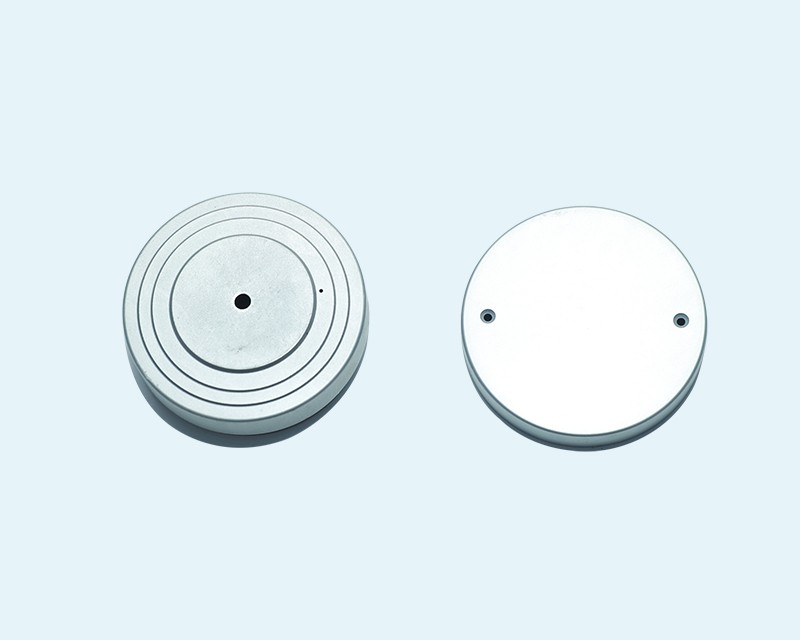
Machinists prefer CNC over manual milling machines for many reasons, and the biggest one is control. CNC stands for Computer Numerical Control, which means the machine follows programmed instructions instead of relying entirely on the machinist’s hands and eyes. Manual milling machines still have important uses, but in modern workshops, CNC machines are often the better choice because they are faster, more accurate, more repeatable, and easier to use for complex parts. These advantages make CNC the preferred option in many industries such as aerospace, automotive, medical devices, and general manufacturing.
One of the main reasons machinists like CNC machines is precision. A manual milling machine depends on the skill of the operator. Even an experienced machinist can make small mistakes when reading measurements, turning handwheels, or aligning tools. CNC machines reduce this problem because the movement of the cutting tool is controlled by a computer program. Once the program is set correctly, the machine can produce parts with very tight tolerances. This level of accuracy is very important when making components that must fit together perfectly. For example, engine parts, medical implants, and aircraft components often require exact dimensions, and CNC machines are much better suited to this kind of work.Repeatability is another major advantage. If a machinist needs to make one part using a manual mill, they can do it carefully. But if they need to make fifty, one hundred, or even thousands of the same part, it becomes difficult to keep every piece exactly the same by hand. CNC machines solve this problem because they can repeat the same program over and over with minimal variation. This consistency is one of the reasons factories use CNC machines for production work. Once the program is tested and approved, the machine can produce identical parts with very little additional effort. This not only saves time but also reduces waste and improves quality control.Speed is also a major factor. Manual milling can be slow because the machinist must position the workpiece, adjust the machine, and make each cut manually. A CNC machine automates much of this process. It can move quickly between cutting paths, change tools automatically on some models, and run for long periods with little supervision. This increases productivity and allows a shop to finish more jobs in less time. Even though setting up a CNC machine may take time at the beginning, the total time saved during production is usually much greater, especially for medium or large batches.CNC machines are especially useful for complex shapes. With a manual milling machine, the machinist must carefully move the table and tool to create grooves, holes, curves, and angled surfaces. Some shapes are very difficult or nearly impossible to make accurately by hand. CNC machines can follow complex tool paths with ease. They can make three-dimensional surfaces, pockets, threads, and detailed contours that would take a lot of skill and time on a manual machine. This ability allows engineers and designers to create more advanced parts because they know CNC Machining can bring their ideas to life.Another reason machinists prefer CNC is that it reduces operator fatigue. Manual machining requires constant attention and physical effort. The machinist must watch measurements, turn handles, check alignment, and stay focused for long periods. This can be tiring, especially during long jobs. CNC machines do most of the physical work automatically. The operator still needs skill and knowledge, but the machine handles the repetitive movement. This makes the job less physically demanding and can help reduce mistakes caused by fatigue. In a busy shop, this is a significant benefit.CNC machining also improves safety in many cases. Manual milling requires the operator to be close to the machine while making adjustments and cuts. There is always a risk of injury from moving parts, sharp tools, or flying chips. CNC machines can be enclosed or guarded, and the operator can often step back while the machine runs. Although CNC machines still require proper safety procedures, automation can reduce direct contact with cutting operations. This makes the workplace safer and allows machinists to focus more on supervision, inspection, and programming.Flexibility is another important advantage. Some people think CNC machines are only good for mass production, but they are also very useful for custom work. A machinist can change a CNC program to make a different part without completely rebuilding the machine setup. This is helpful for shops that do prototype work or small production runs. In the past, making a new part on a manual mill might require a lot of rethinking and manual adjustment. With CNC, once the digital model and program are ready, the machine can be adapted much more quickly. This makes CNC highly versatile.CNC machines also help reduce human error. Manual milling depends heavily on concentration and experience. A machinist may misread a dial, forget a step, or cut too much material. These mistakes can cost time and money. CNC machines follow the exact instructions in the program, so if the program is correct, the results are usually reliable. Of course, CNC machines can still make errors if the code, setup, or tool offsets are wrong, but once those issues are controlled, the process is much more consistent than manual work. This reliability is one reason companies trust CNC for important manufacturing tasks.From a business point of view, CNC machines are often more cost-effective in the long run. Even though they are usually more expensive to buy than manual milling machines, they can save money over time through faster production, fewer mistakes, lower labor requirements, and better material usage. A CNC machine can often run with one operator supervising several machines, which increases efficiency. Manual machines may be cheaper at first, but they often require more labor and produce less output. For a shop that wants to stay competitive, CNC is usually the smarter investment.It is important to note that manual milling machines are not useless. They are still valuable for simple jobs, training, repair work, and situations where a machinist needs direct hands-on control. Manual mills can be excellent tools for learning the basics of machining because they teach measurement, setup, and cutting technique. However, when the goal is high precision, speed, consistency, and complex part production, CNC machines are clearly superior.In conclusion, machinists prefer CNC over manual milling machines because CNC offers better precision, repeatability, speed, flexibility, safety, and efficiency. It reduces human error, lowers physical strain, and makes it possible to produce complex parts more easily. While manual milling still has its place, CNC has become the standard choice in modern manufacturing because it meets the demands of today’s industries much better. For machinists and companies alike, CNC is not just a tool for convenience; it is a tool for quality, productivity, and competitiveness.Copyright © 2024 Ningbo Hongzhe Precision Machinery Co., Ltd


Comment
(0)